
Huw Morys
Huw Morys (1622–1709) — better known by his bardic name Eos Ceiriog,
“the Nightingale of Ceiriog” — was one of the most beloved Welsh poets of the 17th century.
Born in 1622, likely in the Llangollen area, he later settled at Pont‑y‑meibion in the parish of Llansilin, where he spent almost his entire life. He was a Church Warden of St. Silin’s Church for many years.
A younger son, he was briefly apprenticed to a tanner, but the trade never held him. Instead, he became known for his musical ear, his mastery of both strict bardic metres and popular ballad forms, and his ability to write poems that ordinary people could sing to familiar tunes. His work bridged the fading medieval bardic tradition and the rising popular verse of rural Wales.
Living through the upheavals of the English Civil War, Morys was a staunch Royalist and a committed churchman. He mocked Cromwellian soldiers and Puritan preachers in sharp, witty verse — often disguising them as animals to avoid punishment. Yet he also wrote warm love poems, lively carols, moral reflections, and affectionate portraits of local characters. His poetry offers a vivid window into everyday rural life in 17th‑century Wales.
He never married, remaining rooted in the Ceiriog Valley, where his reputation grew until he was regarded as a kind of local sage. When he died in 1709, aged 87, he was buried at Llansilin Churchyard , below his memorial lancet window. The large window in the north aisle has inscriptions which still honour him today.

Huw Morys dedication
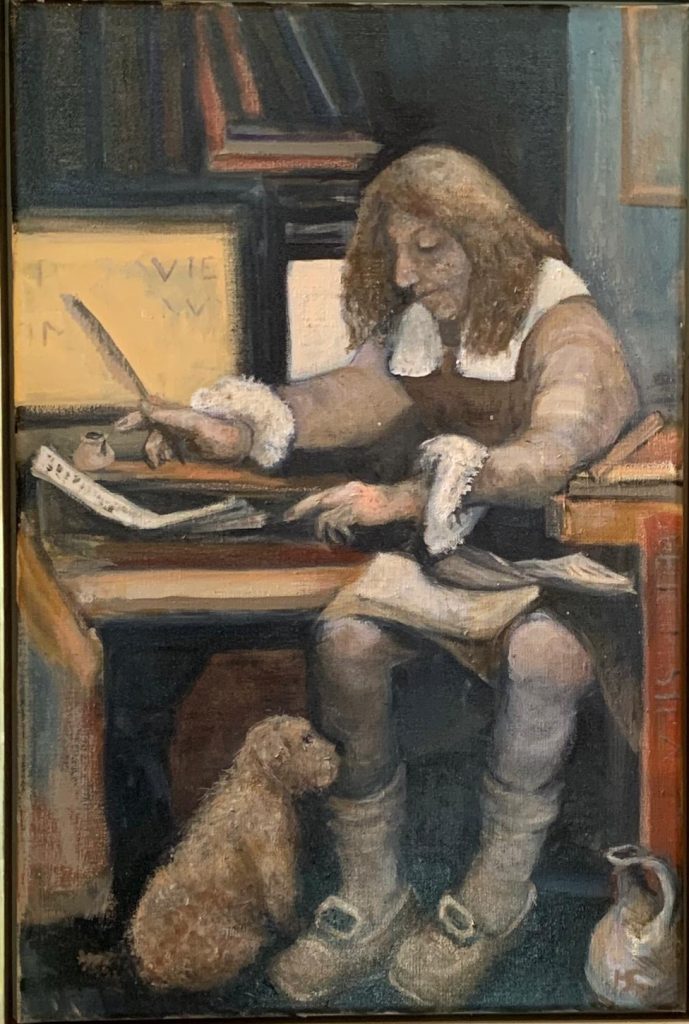
Artist Impression